

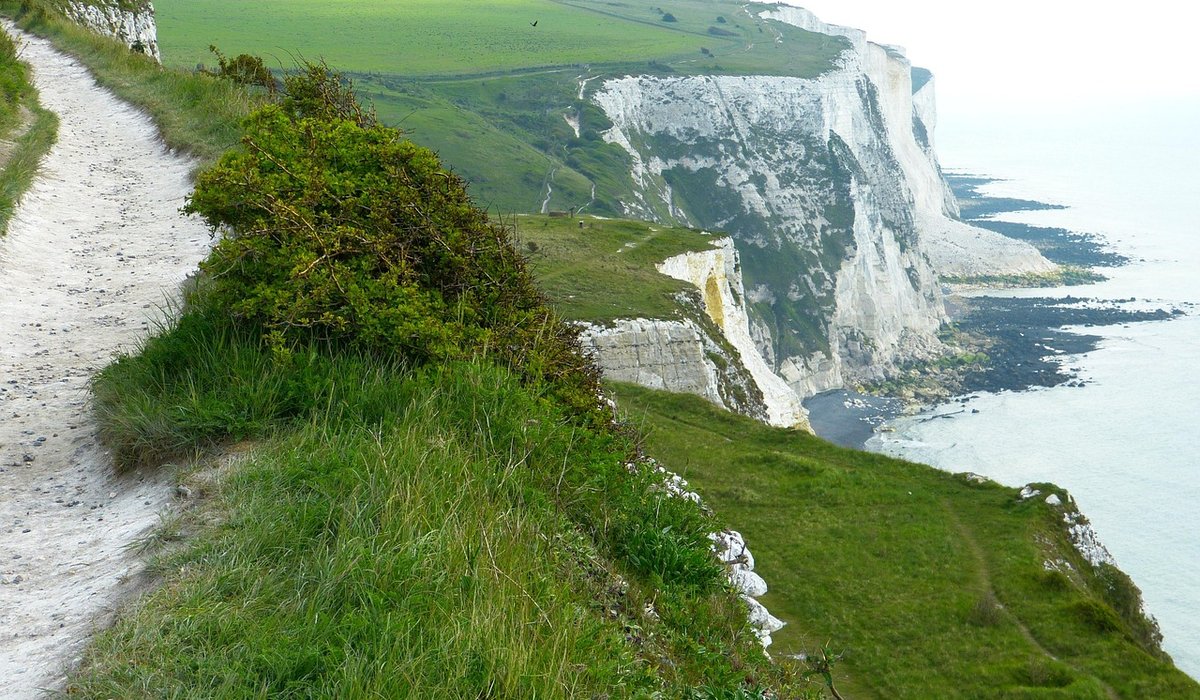
A wooded valley opening onto a rocky shore, with a path up one side and a cliff-top return on the other: the coastal combe is one of the most satisfying shapes a British walk can take. This guide sets out how to plan a circular route of this kind properly, using a low-tide window, so that the shoreline section, the climb and the cliff-top return all fall into place.
A combe is a steep-sided valley cut into the coastline, usually with a stream running down its floor to a small beach or a gap between headlands. On the south-west peninsula, in Wales and along parts of the Scottish coast, they are common enough that you can pick one almost at random and find a walk. The appeal for a walker is the natural loop they offer: the valley gives you shelter and woodland, the seaward end gives you a beach, and the headlands either side give you height and views.
The catch is that a combe's lower slopes are often unstable, its stream crossings can flood, and the beach at its mouth may only exist at certain states of the tide. Plan around those three facts and the rest is straightforward.
Start with a tide table, not a map. Identify the nearest standard port and note the times of low water and the height of the low tide. A low tide of 0.5 metres or less at a spring period will expose far more sand, rock and flat reef than a 2.5-metre neap low, and that difference decides whether your shoreline section is a pleasant half-hour or a scramble over slippery boulders.
If the low tide falls at dusk or in the middle of a busy afternoon, consider reversing the route: climb the cliff side first and drop to the shore last, so the beach section is the final flourish rather than a rushed beginning.
Take the inland path up the valley rather than the coastal one. This side is usually shaded, damp and rich with ferns, mosses and ancient woodland indicators such as wild garlic in spring and dog's mercury in early summer. The gradient is gentler than the cliff side, which makes it the better choice for the ascent, particularly on a warm day.
Watch for the details that make a wooded combe worth the climb: the transition from oak and ash on the lower slopes to wind-pruned hawthorn and blackthorn higher up, the point where the stream crosses the path, and the first gap in the canopy that reveals the sea behind you. Allow an extra fifteen minutes for the ascent compared with what the map suggests, because the ground underfoot is often rooty and slick.
Once you reach the headland, the character of the walk changes entirely. The path runs along the top of the cliff, usually on short turf kept close by wind and salt, with coastal wildflowers in early summer: thrift, sea campion, kidney vetch and, on some stretches, spring squill. The views back along the coast open up the combe you have just climbed, which is the reward for taking the harder line.
This is the section where seabirds matter most. Fulmars nest on narrow ledges, guillemots and razorbills gather on suitable cliffs between late spring and midsummer, and peregrines hunt along the ridge. Keep to the path, keep dogs close and quiet between March and July, and use binoculars rather than approaching the edge.
Check access notices at the start. Some combes have seasonal restrictions for nesting birds or livestock, and footpaths occasionally divert after landslips. A quick look at the local authority's rights of way information or the national park's website will tell you whether anything has changed since your map was printed.
A circular combe walk of this kind usually runs between four and eight miles and takes three to five hours at a relaxed pace, including stops for views, photographs and a flask on the headland. Fit it around the tide rather than the clock, and you will find the day arranges itself: a leisurely start, the climb while the air is still cool, the beach at low water, and the cliff-top return as the light softens.
Finish with something warm from a café or a village shop if there is one nearby, and take a moment to look back at the valley you have just walked around. The shape of the coast, read properly with a tide table and an eye for the weather, is one of the most rewarding companions a walker in Britain can have.

The Coastalcombe Written for people who value the details, and want honest guidance they can trust.

The Coastalcombe No rushing, no fuss — just thoughtful notes and practical help, written by people who care.

Find sheltered grassy ledges, flat rocks and bench viewpoints where you can rest, refuel and enjoy the sea without disturbing wildlife.

Comments
ALina Kelian
19th May 2018 ReplyThe Coastalcombe No rushing, no fuss — just thoughtful notes and practical help, written by people who care. ullamco laboris nisi ut aliquip ex ea commodo consequat.
Rlex Kelian
19th May 2018 ReplyThe Coastalcombe No rushing, no fuss — just thoughtful notes and practical help, written by people who care. ullamco laboris nisi ut aliquip commodo.
Roboto Alex
21th May 2018 ReplyThe Coastalcombe Simple, genuine and looked after with care — the kind of place worth returning to. ullamco laboris nisi ut aliquip ex ea commodo consequat.