

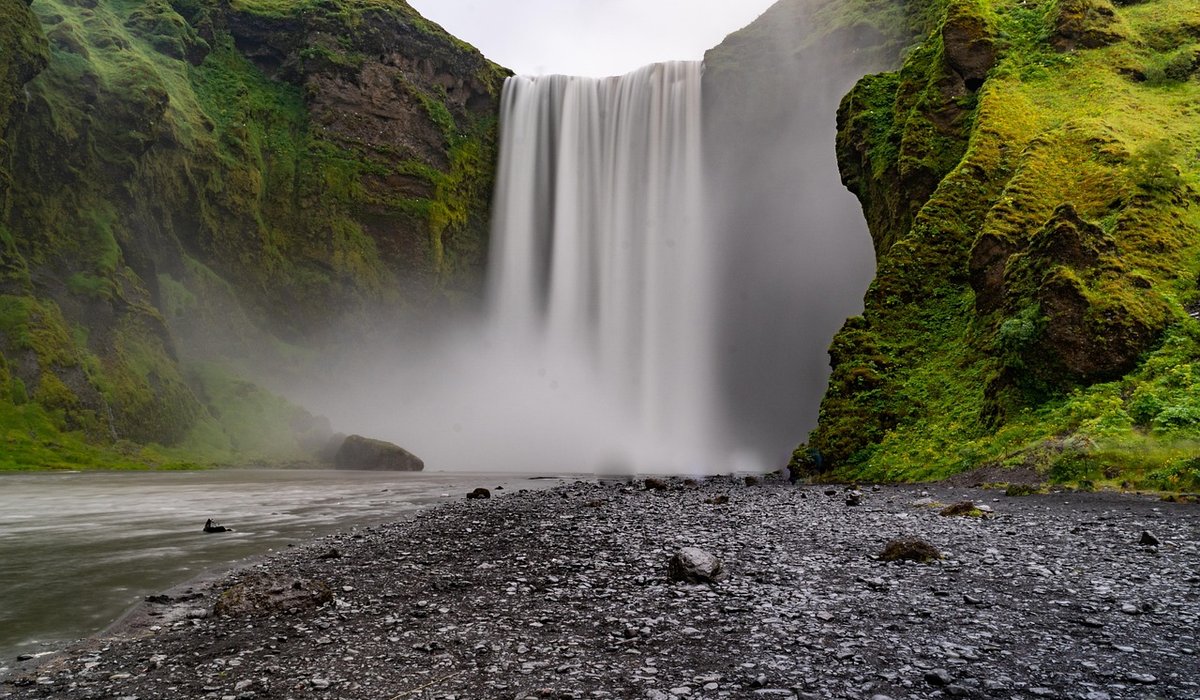
A clifftop path asks something unusual of a walker. It offers a view that rearranges itself with every step — a headland opening into a bay, a stack emerging from the haze, gannets stitching lines across the water — and then it quietly punishes anyone who tries to consume it at speed. The South West Coast Path, the Pembrokeshire Coast Path, the Cleveland Way, the Anglesey coast, the cliff sections of the Norfolk and Scottish shores: all of them reward a pace well below the one most of us default to.
Mindful walking is not a soft alternative to "proper" walking. It is a technique, and like any technique it improves with practise. On a cliff path it also makes you safer, because a walker who notices where their feet are landing is a walker who does not drift towards an eroding edge while staring at a fulmar. What follows are practical ways to slow down without feeling as though you are dawdling.
Start at the car park or the bus stop, not at the first stile. Stand still for a minute. Feel the wind direction on your face and note it, because it will shape your experience of every exposed section ahead. Loosen your shoulders and let your jaw soften. Take three slow breaths, each one longer on the out-breath than the in-breath — in for four, out for six suits most people on level ground.
Then set a deliberate pace for the first ten minutes: roughly two-thirds of your normal walking speed. It will feel artificial. That is rather the point, because this opening stretch is when most walkers burn through the finest scenery of the day without registering any of it. Let your stride shorten rather than slowing your legs awkwardly; short steps on uneven ground are steadier, quieter and kinder to the knees. Leave the headphones in your rucksack, and plan a distance about a third shorter than you would comfortably manage inland — coastal ground is slower and climbier than the map suggests.
Sound is the easiest sense to engage and the first one we smother. Try building a sound map as you walk: every few hundred metres, stop and identify five distinct noises, then move on. You will quickly find the coast has layers. There is the distant wash of swell on a beach you cannot see, the sharper crack of waves against a rock shelf, the wind combing through marram grass, oystercatchers piping somewhere below, the dry rattle of gorse pods in late summer, skylarks rising over rough grazing in spring and early summer.
Notice, too, how the soundscape changes with the terrain. A dip in the path muffles everything; a bare headland exaggerates it. Gully winds can make a still day roar. When you reach a corner that turns you away from the sea, the sudden hush is one of the great small pleasures of coastal walking — so pause and let it land.
Attention to texture keeps your eyes down and your footing honest, which matters on cracked granite, loose shale, chalk rubble and slick slate. Rather than simply avoiding trips, take an interest. Notice how the path surface changes as the geology changes — the gritty crunch of weathered sandstone, the hollow ring of volcanic rock, the springy give of turf cropped short by sheep and rabbits.
Then widen your gaze. Sea thrift cushions the wind-blasted edges with pink in June. Sea campion and kidney vetch hug the shallower soils. Lichens paint exposed stone in grey-green and orange, and a hand's breadth of clifftop turf can hold more plant species than a whole field inland. Learn to recognise a few, and every walk acquires a running commentary that costs nothing and never bores.
Steep flights of steps and long, exposed traverses are where mindfulness pays for itself. On a climb, match your breathing to your steps rather than fighting it: two steps per in-breath, two steps per out-breath on gentle gradients, one step per breath on the steepest sections. You will climb more steadily and stop less often.
On an exposed stretch, where wind and drop compete for attention, box breathing steadies the system quickly:
If the wind makes counting impossible, simply lengthen the out-breath until it is roughly twice the in-breath. This is a reliable way to settle a racing heart before you continue.
A mindful walk is punctuated, not continuous. Aim to stop properly every twenty minutes or so, and stop well back from any edge. Choose a spot with a solid footing, turn to face the view, and give yourself a full minute: thirty seconds of looking without commentary, thirty seconds of listening.
Before moving on, run a short safety ritual. Check where the tide will be if your route drops to a beach, note the wind strength and direction, confirm your escape route if the weather turns, and keep an eye on the time — coastal walks take longer than the distance implies. Tell someone your route and expected return, carry a paper map as well as a phone, and remember that cliff edges can be undercut and mobile signal is patchy at best.
Do all that, and the reward is considerable: not just a walk completed, but a coast actually seen, heard and remembered.

The Coastalcombe Written for people who value the details, and want honest guidance they can trust.

The Coastalcombe No rushing, no fuss — just thoughtful notes and practical help, written by people who care.

Follow simple principles for waste, wildlife, fires and footpaths so your visit protects fragile dunes, cliffs and intertidal habitats.

Comments
ALina Kelian
19th May 2018 ReplyThe Coastalcombe No rushing, no fuss — just thoughtful notes and practical help, written by people who care. ullamco laboris nisi ut aliquip ex ea commodo consequat.
Rlex Kelian
19th May 2018 ReplyThe Coastalcombe No rushing, no fuss — just thoughtful notes and practical help, written by people who care. ullamco laboris nisi ut aliquip commodo.
Roboto Alex
21th May 2018 ReplyThe Coastalcombe Simple, genuine and looked after with care — the kind of place worth returning to. ullamco laboris nisi ut aliquip ex ea commodo consequat.